
We unfortunately know it too well. The architect has finished the drawings. Planning has been submitted and sometimes already granted. Key structural and spatial decisions are already fixed. The interior designer gets engaged at a point where they can refine but no longer shape. This is a pattern we see regularly across the Cotswolds. And it is usually where the gap between a house that looks good on paper and one that feels properly resolved in practice begins.
At RJ2 Design, we push to be appointed alongside the architect, so that the interior design informs the building from the start rather than after the key decisions have been made.
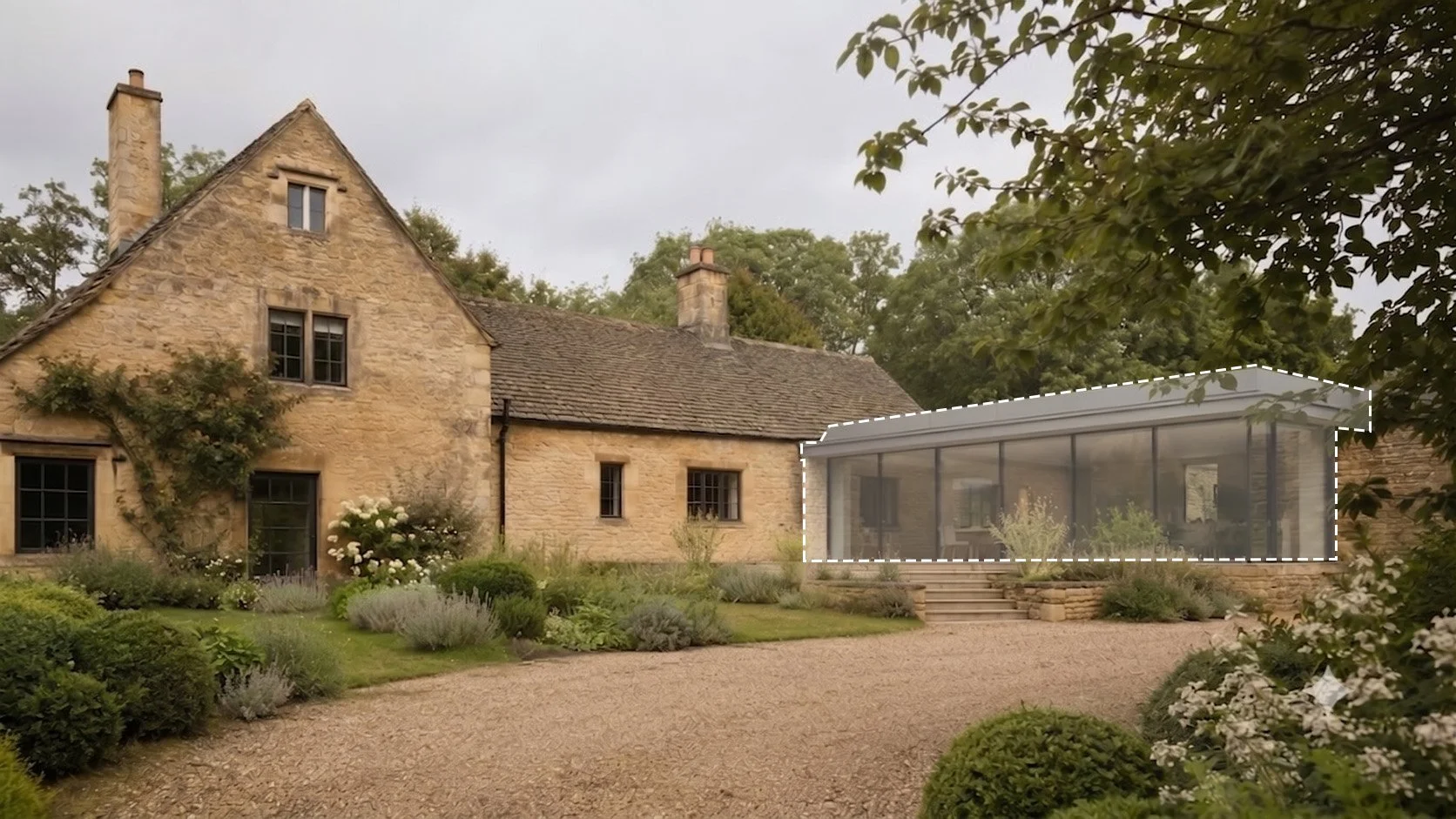
The planning stage is where the best decisions are made. Interior design input at this stage shapes the outcome before anything is fixed.
What an architect does, and where their attention is rightly focused
An architect's responsibility is the building itself. Structure, envelope, planning compliance, building regulations and the architectural language of the project are the architect's domain, and rightly so. Of course, some architect firms offer a full scope and carry both disciplines well. More commonly though, interior design is offered as a specialist discipline in its own right, and for good reason. The spatial, material and decorative decisions that shape how a home is lived in benefit from dedicated focus and a separate set of eyes.
On refurbishment and extension projects in the Cotswolds, where listed building consent, period fabric and site constraints add layers of complexity, the architect's attention is rightly absorbed by the building. Responding to a Grade II listed farmhouse, resolving a contemporary extension against a stone elevation, or navigating a sensitive planning authority takes considerable focus and expertise and that work deserves the attention it requires.
What this means in practice is that the detailed execution of how the home will be lived in tends to sit outside what the architectural appointment has the scope or time to carry fully.
Furniture layouts, storage decisions, joinery design, material transitions, lighting coordination, socket positions, ceiling heights relative to bespoke cabinetry: these fall between architecture and construction. Not because architects are unaware of them, but because their role is to produce a beautifully resolved building. The interior layer is a separate discipline and needs its own dedicated resource.
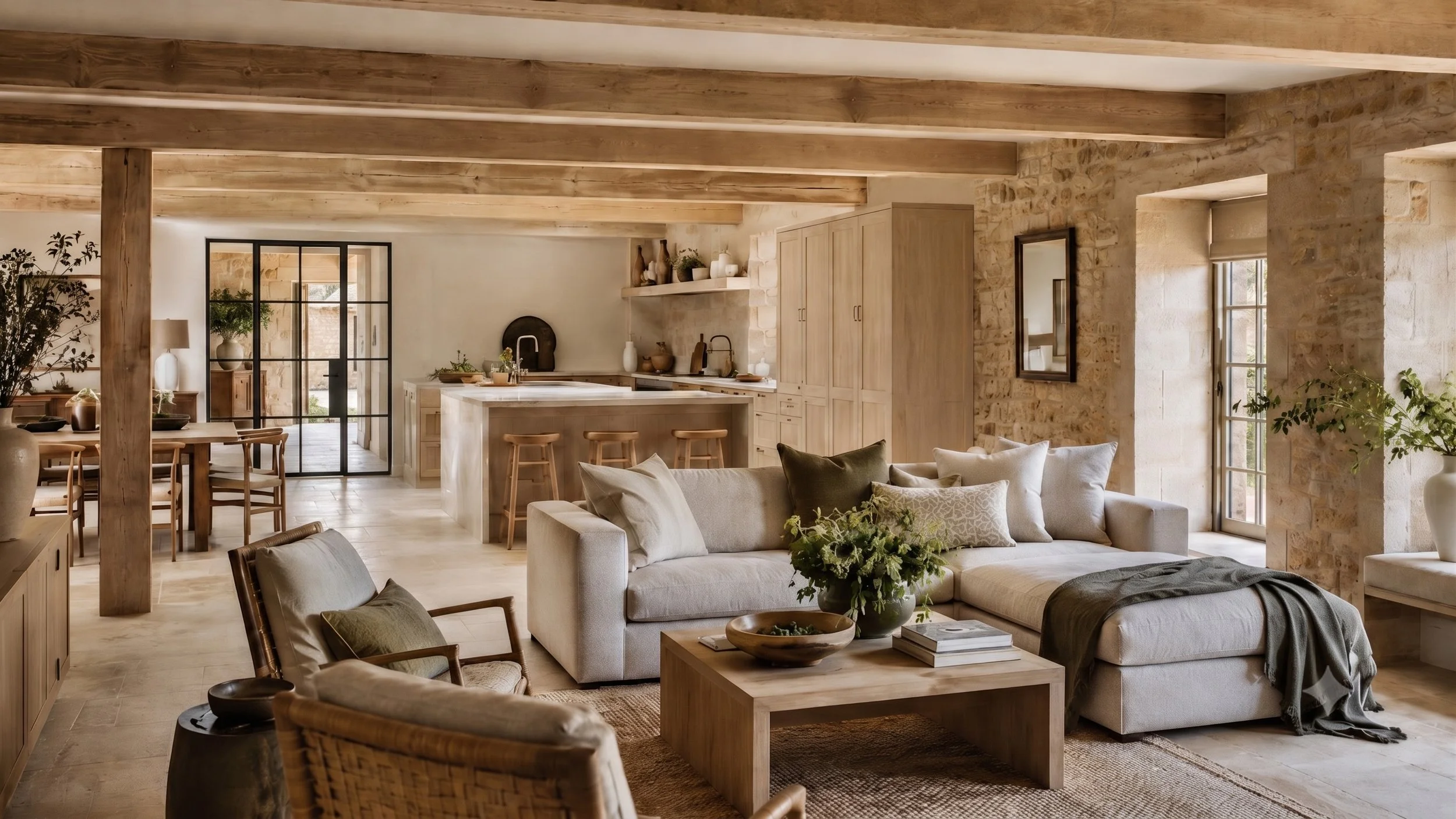
An open plan kitchen and living space involves hundreds of coordinated decisions: joinery heights, material transitions, lighting positions, furniture layout and circulation. These are resolved long before a builder arrives on site.
What an interior designer does, and why timing matters
The interior designer carries the project from architectural intent to lived reality.
We work through how the spaces will actually function for the people who live in it, how movement flows through the house, where storage sits and whether there is enough of it. We consider how the kitchen relates to the garden and what happens at the junction between a stone floor, oak joinery and the original building. Where does the cooking take place, how are we enhancing the family’s lifestyle and add to the story of the building? We take care of the smaller details, where sockets and equipment will be positioned, and whether anyone has confirmed that yet.
These are not decorative questions. They are spatial, ergonomic and technical and exactly these need to be resolved before work starts on site, not during it.
When an interior designer is involved early, these decisions are worked through properly alongside the architect before anything is fixed. When appointed late, the designer works within a framework that may not have anticipated the interior at all. The result is usually compromise: spaces that are architecturally correct but practically incomplete.
The Cotswolds context
High-end residential projects in the Cotswolds carry particular considerations. Period buildings, listed constraints, natural stone, existing timber structures and deep window reveals all affect how interiors are planned and detailed.
On renovation projects, existing furniture, artwork and personal objects need to be considered from the start rather than accommodated later. Clients relocating to the Cotswolds from London or abroad frequently arrive with significant existing pieces and a clear sense of how they want to live, but need help understanding how that translates into a Cotswolds property. This is interior architecture work, and it needs to begin when the architect is working through the layouts, not when the builder has started on site or when we are nearing the end of the build.
Where gaps appear when timing is wrong
Across the projects we work on, the same issues tend to surface when interior design is brought in at a later stage.
Kitchens are drawn schematically but never fully resolved before tender. Lighting schemes are not coordinated with ceiling structure or joinery positions. Electrical first fix is completed before furniture layouts have been confirmed. Materials are selected visually but not coordinated across junctions. Wardrobes are located without confirming internal configurations or how doors open relative to the room.
None of this reflects poorly on the architect. As mentioned, these decisions simply fall outside what a standard architectural appointment is structured to include or falls within the grey area that no one called out at the start of the project. Unfortunately, the issues do not disappear because no one is carrying them. They reappear on site, under time pressure, where changes are more disruptive and more expensive.
An interior designer working in parallel anticipates these decisions. Budgets are understood earlier. Interior fit-out tender packages are better developed and contractors receive more complete information. Decisions are made in the right order, at the right time.
Common concerns: the cost of early involvement
We often hear a version of the same question. If planning has not been granted yet, why pay for an interior designer at this stage?
It is a fair point and the answer is straightforward. During the planning and consent stage, our involvement is deliberately light. We do not run full design development while a scheme is awaiting approval, running the risk of it not being approved. What we do is work in the background on concept direction, so that when consent comes through, the interior thinking is already underway rather than starting from scratch. Where the architect needs input on anything that touches the interior, we are available to support.
This means clients are not paying for full design work during a phase where that would be premature. It also means they are not spending money developing a detailed interior concept for a scheme that may yet change through the planning process.
Once planning and listed building consents are in place, we engage fully. By that point, the groundwork has been done quietly and the project can move forward without delay.
How collaboration works in practice
The strongest residential projects are those where architect and interior designer work in parallel from the early stages, with clearly understood responsibilities on each side.
The architect defines the building: its structure, proportions, planning position and long-term integrity. The interior designer carries the project through the spatial and detailed decisions that determine how it is actually used.
In practice, this means reviewing architectural drawings from an end-user perspective, looking at furniture planning, storage, room proportions, circulation and how each space functions day to day, and feeding observations back to the architect while there is still room to adjust. We coordinate lighting, joinery and material decisions so that when drawings go to tender, the information is complete.
On site, we support design intent through contractor coordination, drawing clarification and timely decision-making. This is not duplication of effort but merely a continuity of intent from the first sketch to the finished room. As we work alongside the RIBA plan of work, our process is aligned with your architect at each stage and allows us to work in parallel rather than in sequence. This gives our disciplines a shared framework and removes the ambiguity about who is doing what and when.
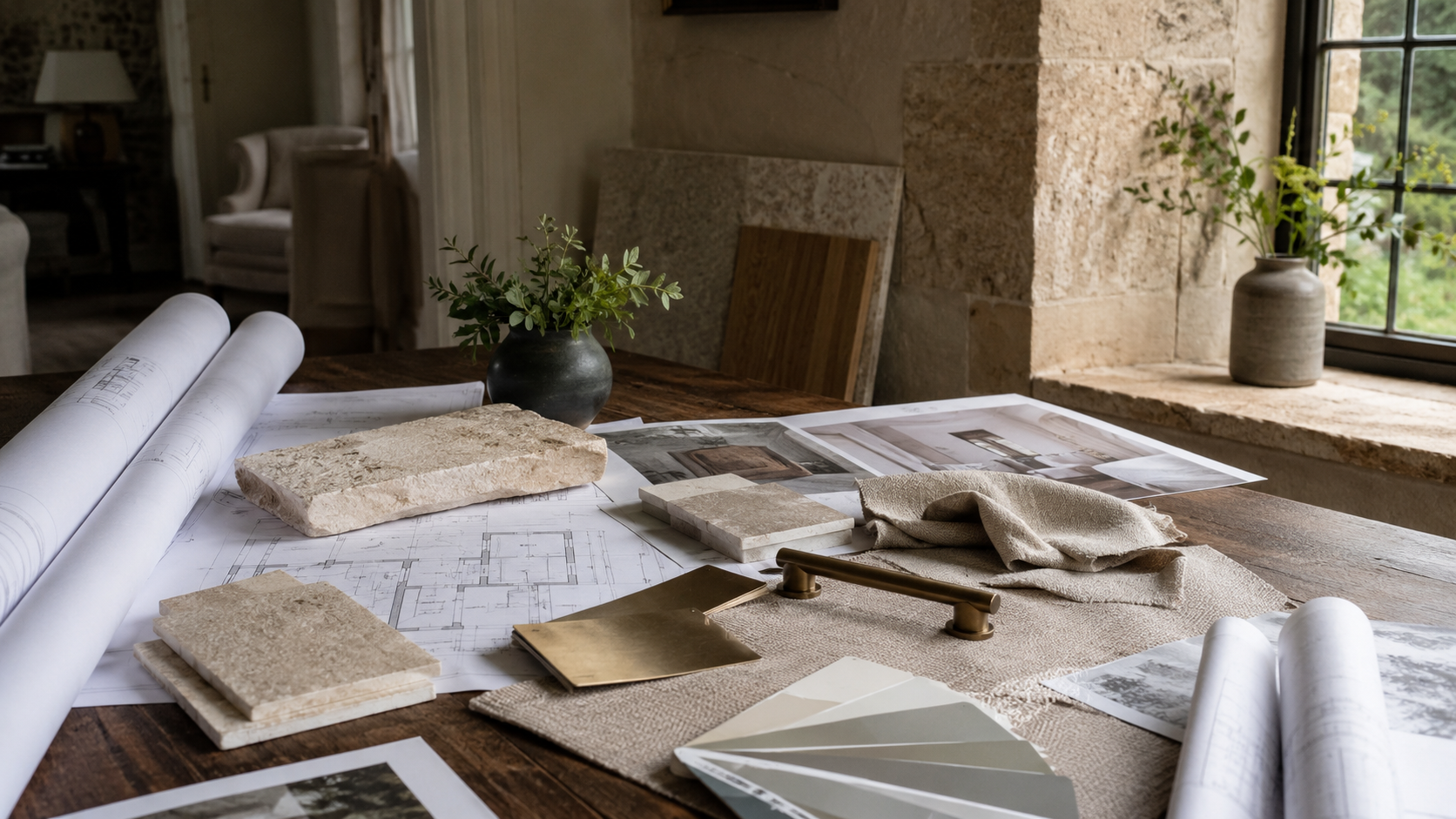
While your architect is working through the drawings, we are already considering materials, finishes and the interior concept. Nothing is committed to until consent is granted.
A note on scope and responsibility
On every project, we establish clear scope and responsibilities with the architect, contractor and specialist suppliers from the start. In the kick-off meeting we address a responsibility matrix, who is responsible for what and who supplies what item. Through this conversation and design management, we allow a project to run cleanly, with everyone working from the same information.
Working with RJ2 Design
RJ2 Design is a founder-led interior architecture and design studio based in Blockley, in the North Cotswolds. Our background includes high-end residential and superyacht interiors, where spatial precision, coordinated detailing and considered decision-making are not optional. We bring that discipline to residential projects in the Cotswolds and surrounding counties.
We prefer to be involved early, to work alongside the architect rather than after them, and to carry the interior design forward with the same level of care the building itself receives.
If you are planning a renovation, extension or new build in the Cotswolds and are at the stage of appointing your team, we would love to hear about the project.